• What’s something most people don’t understand?

    What Most People Don’t Understand: The Power of Small Actions
    In a world full of big dreams and fast success stories, many people believe that only huge efforts bring big results. But one important thing most people don’t truly understand is this:
    Small actions, done consistently, can completely change your life.
    The Misunderstanding
    People often wait for the “perfect moment” or think they need a lot of time, money, or energy to start something meaningful. They believe:
    “I’ll start when I feel ready.”
    “This is too small to matter.”
    “One day I’ll do something big.”
    But the truth is, big success is made of small steps.
    The Hidden Power of Small Steps
    Think about learning English, saving money, or improving your health. You don’t achieve these in one day. Instead:
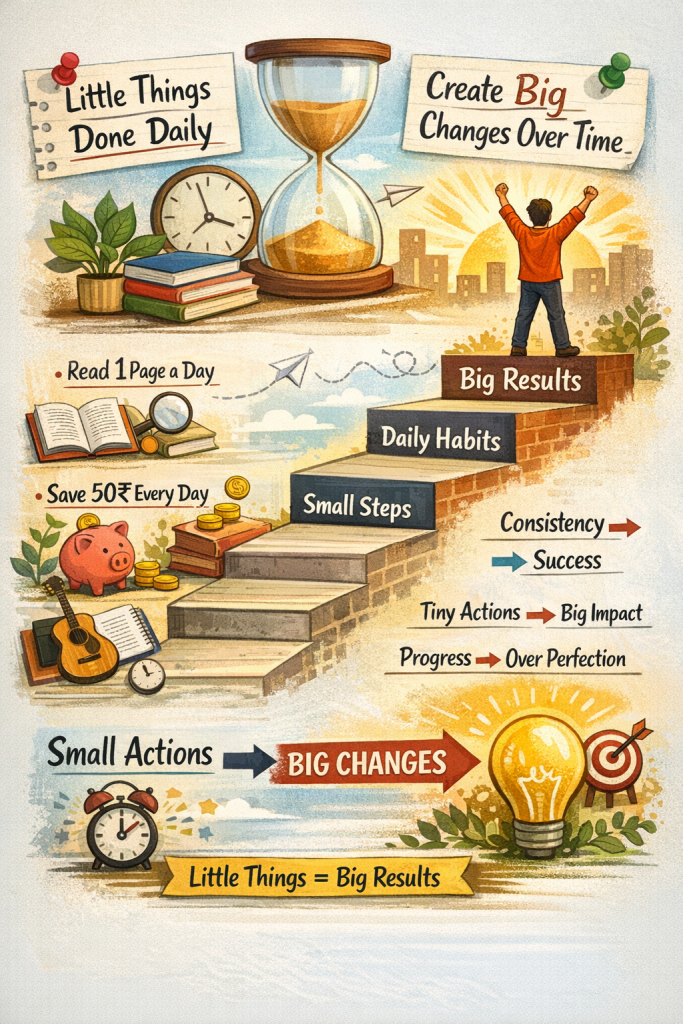
    Reading one page daily builds knowledge.
    Saving a little money regularly creates financial security.
    Practicing a skill for 10 minutes daily leads to mastery.
    These small habits may look unimportant at first, but over time, they grow into something powerful.
    Why People Ignore This
    There are a few reasons why people don’t value small actions:
    No instant results – People want quick success.
    Boredom – Small steps feel repetitive.
    Underestimation – They don’t realize how much small efforts add up.
    Because of this, many give up too early.
    Real-Life Example
    Imagine two students:
    One studies 10 minutes every day
    The other studies only before exams
    After a few months, the first student will have a stronger understanding, better confidence, and less stress. That’s the magic of consistency.
    How to Use This Power
    You don’t need to change your whole life in one day. Start simple:
    Set tiny goals
    Be consistent, not perfect
    Focus on progress, not speed
    For example:
    Learn 3 new English words daily
    Save 50 rupees every day
    Practice a skill for 15 minutes
    Conclusion
    The biggest truth most people don’t understand is that small actions are not small at all. They are the building blocks of success.
    So instead of waiting for a big opportunity, start today with a small step.
    Because in the end,
    little things done daily create big changes over time.
     

  • How often do you say “no” to things that would interfere with your goals?

    The Power of Saying “No”: Protecting Your Goals

    In a world full of distractions, opportunities, and constant demands, one simple word holds incredible power: No. Yet, many of us struggle to say it. We fear disappointing others, missing out, or appearing rude. But the truth is, every time we say “yes” to something that doesn’t align with our goals, we are indirectly saying “no” to our dreams.

    Why Saying “No” Matters

    Your time and energy are limited. Imagine them as a small bucket—every task, favor, or distraction takes something out of it. If you keep saying “yes” to everything, your bucket will quickly empty, leaving nothing for what truly matters.

    Saying “no” is not about being negative. It’s about being focused. It’s about choosing what is important over what is urgent, what is meaningful over what is easy.

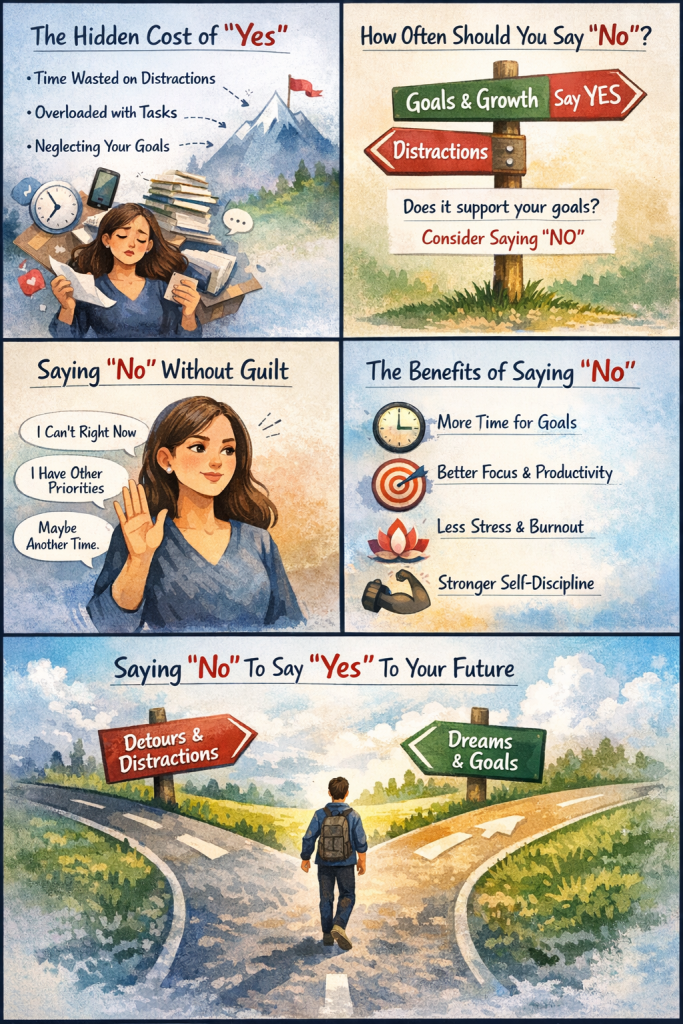
    The Hidden Cost of “Yes”

    Every “yes” has a cost:

    – Saying yes to unnecessary social plans may take time away from your studies or work.
    – Saying yes to extra tasks may reduce your productivity on important projects.
    – Saying yes to distractions (like endless scrolling) steals time from your personal growth.

    When you don’t protect your time, your goals slowly drift further away.

    How Often Should You Say “No”?

    There is no exact number, but here’s a simple rule:

    👉 If something does not support your goals, growth, or well-being — consider saying “no.”

    Successful people often say “no” more than “yes.” Not because they are selfish, but because they are clear about their priorities.

    Saying “No” Without Feeling Guilty

    Many people feel guilty when they say no. But remember:

    – You are not responsible for everyone’s expectations.
    – Protecting your goals is not selfish—it is necessary.
    – A polite “no” is better than a frustrated “yes.”

    You can say:

    – “I appreciate it, but I can’t commit right now.”
    – “I have other priorities at the moment.”
    – “Maybe another time.”

    The Benefits of Saying “No”

    When you start saying “no” wisely, you will notice:

    – More time for your goals
    – Better focus and productivity
    – Less stress and burnout
    – Stronger self-discipline

    Most importantly, you begin to take control of your life.


    Final Thoughts

    Saying “no” is not about closing doors—it’s about choosing the right ones to walk through. Every time you say “no” to something that distracts you, you are saying “yes” to your future.

    So, ask yourself:
    Is this helping me move closer to my goals, or pulling me away?

    Your answer will guide you.

    Because in the end, success is not just about what you do—it’s also about what you choose not to do.

  • What’s a secret skill or ability you have or wish you had?

    The Secret Skill I Wish I Had
    Have you ever imagined having a secret power that no one knows about? Something special that makes you different from everyone else? I often think about this, and the one skill I truly wish I had is the ability to read people’s minds.
    Imagine walking into a room and instantly knowing what everyone is thinking. It would be like having a superpower! I could understand my friends better, help people who are sad but don’t say it, and avoid misunderstandings.
    Sometimes, people don’t express their true feelings. They might smile outside but feel upset inside. If I had this ability, I could support them at the right time. It would make me a better friend, teacher, and person.
    But this power also has a downside. Knowing everything about others might become overwhelming. Not all thoughts are nice, and hearing negative thoughts could hurt feelings. Privacy is also important, and everyone deserves their own space.
    So, instead of actually reading minds, I think the real “secret skill” is learning to understand people without words. By observing expressions, listening carefully, and showing kindness, we can almost feel what others are going through.
    In the end, maybe we don’t need magical powers. Being kind, patient, and understanding is already a powerful skill. And the best part? Anyone can learn it.

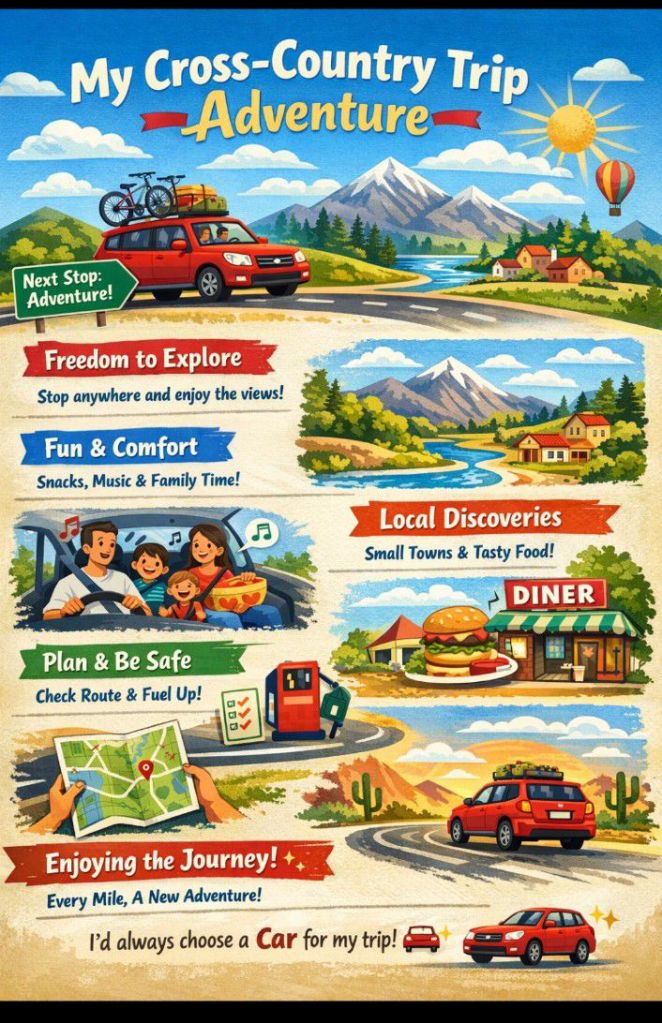
  • If I am going on a cross-country trip, I would choose to travel by car. A car journey is full of fun, freedom, and adventure. It allows me to explore different places at my own pace and enjoy the beauty of nature along the way.
    Traveling by car is exciting because I can stop wherever I want. If I see a beautiful mountain, a green field, or a peaceful river, I can pause and enjoy the view. This is something I cannot do on an airplane or train. A car trip gives me the chance to discover small towns, try local food, and meet new people.
    Another reason I prefer a car is comfort. I can pack my favorite snacks, play my favorite music, and travel with my family. We can talk, laugh, and make happy memories together. Long drives may be tiring, but they are also relaxing and enjoyable.
    A car trip also teaches responsibility. I need to plan the route, check fuel, and take care of safety. It helps me become more organized and careful.
    In the end, a cross-country trip by car is not just about reaching the destination—it is about enjoying the journey. Every mile brings a new story, a new sight, and a new experience. That is why I would always choose a car for my adventure.

  • You’re going on a cross-country trip. Airplane, train, bus, car, or bike?

  • Who is the most confident person you know?

    The Most Confident Person I Know
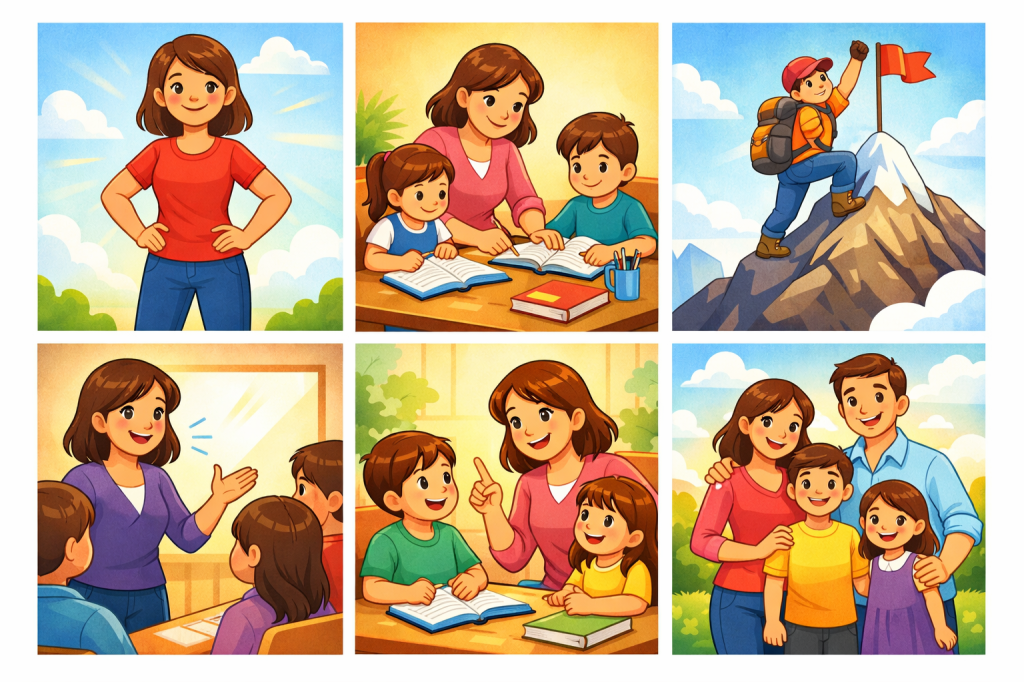
    Confidence is a very important quality in a person. It helps people believe in themselves and face challenges in life. The most confident person I know is my mother.
    My mother is a very strong and hardworking woman. She always believes that hard work and patience can solve many problems. Whenever there is a difficult situation in our family, she stays calm and thinks about the best solution.
    One thing I admire most about her is that she never gives up. Even when things become hard, she keeps trying. She teaches us that failure is not the end but a chance to learn something new.
    My mother is also confident when she talks to people. She speaks clearly and respectfully. Because of her confidence, people trust her advice and like to listen to her.
    Another reason I think she is confident is that she encourages others. She always tells us to believe in ourselves and follow our dreams. Her positive words give us strength and courage.
    Confidence does not mean being perfect. It means believing in yourself and trying your best. My mother shows this quality every day through her actions and words.
    In conclusion, the most confident person I know is my mother. She inspires me to be brave, work hard, and always believe in myself.

  • Have you ever unintentionally broken the law?

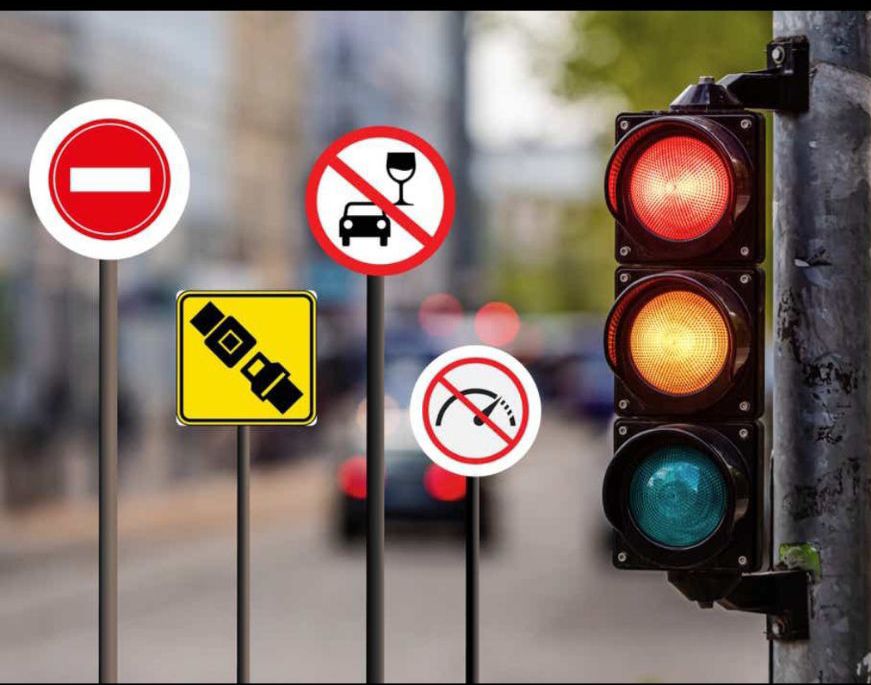
    Have you ever done something wrong without even knowing it? Most of us have. Sometimes, we break a rule or law by mistake. It is not because we are bad people. It happens because we are careless, confused, or unaware.
    Let me share a simple story.
    A Small Mistake
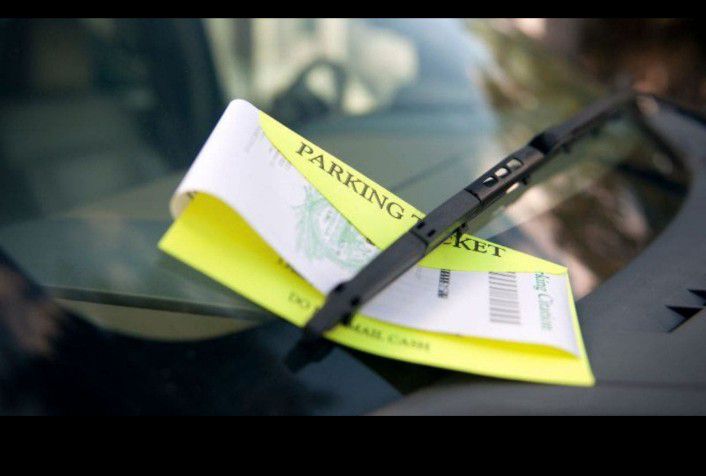
    One day, I was in a hurry. I parked my car near a shop and quickly went inside. I did not notice the “No Parking” sign. When I came back, I saw a ticket in my car. I was shocked. I did not mean to break the law. But I did.
    That day, I learned something important:
    Not knowing a rule does not save us from the result.


    Common Ways People Break Laws by Mistake
    Here are some common examples:
    Driving a little faster than the speed limit
    Using a mobile phone while driving
    Throwing trash in a public place
    Downloading movies or songs from illegal websites
    Forgetting to renew a license on time

    Many people do these things without thinking deeply. But they are still against the law.
    What I Learned
    When I made that mistake, I felt embarrassed. I also felt responsible. Instead of blaming others, I decided to be more careful in the future.
    Here is what I learned:


    Read signs carefully.
    Follow rules even when no one is watching.
    Stay informed about laws.
    Accept your mistake and learn from it.
    Mistakes can teach us powerful lessons.


    Why Laws Matter
    Laws are made to keep us safe. Traffic laws protect drivers and pedestrians. School rules create discipline. Government laws protect society.
    If everyone ignores small rules, big problems can happen.
    Final Thoughts
    Yes, many of us have unintentionally broken a law. What matters most is not the mistake — it is what we do after it.
    Do we ignore it?
    Or do we learn and grow?
    A responsible person accepts mistakes and improves. Life is not about being perfect. It is about becoming better every day.

  • Can you share a positive example of where you’ve felt loved?

  • Where can you reduce clutter in your life?

    Where Can You Reduce Clutter in Your Life?
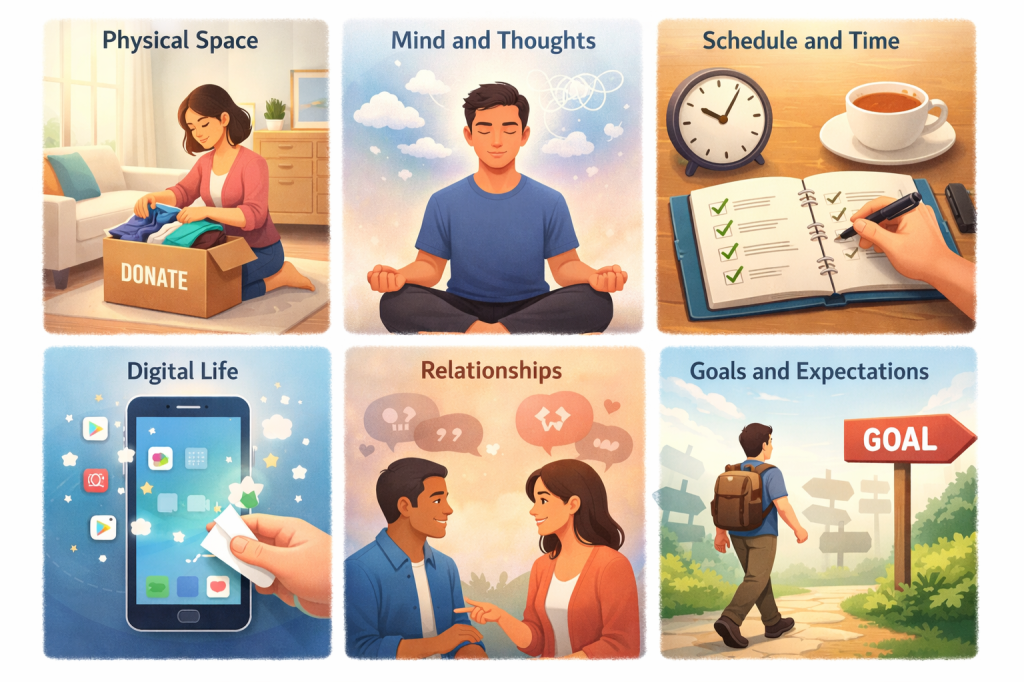
    Clutter is not only about messy rooms or extra belongings. It can also exist in our thoughts, schedules, digital spaces, and even relationships. When clutter builds up, it creates stress, confusion, and a feeling of being overwhelmed. Reducing clutter helps us feel lighter, calmer, and more focused. Let’s explore the main areas of life where we can reduce clutter.
    1. Physical Space
    Our homes often collect unnecessary items over time—old clothes, unused gadgets, broken items, and things we “might need someday.” These objects take up space and energy. Start by keeping only what you truly use or love. A clean and organized physical space makes daily life easier and brings peace to the mind.
    2. Mind and Thoughts
    Mental clutter includes overthinking, negative thoughts, and worrying about things we cannot control. When our mind is crowded, it becomes hard to focus or enjoy the present moment. Practices like writing your thoughts, taking short breaks, praying, or deep breathing can help clear mental clutter and bring clarity.
    3. Schedule and Time
    A busy schedule filled with too many commitments can drain our energy. Saying “yes” to everything often leaves no time for rest or family. Reducing time clutter means learning to prioritize what truly matters and allowing space for rest, hobbies, and self-care.
    4. Digital Life
    Phones, emails, social media, and notifications create a lot of digital noise. Unread messages, unused apps, and endless scrolling can steal our time and attention. Cleaning your digital space by deleting unnecessary apps, organizing files, and limiting screen time can greatly reduce stress.
    5. Relationships
    Sometimes we hold onto relationships that no longer bring positivity or respect into our lives. Emotional clutter comes from unresolved conflicts or unhealthy connections. Choosing relationships that support, respect, and uplift you is an important step toward emotional peace.
    6. Goals and Expectations
    Having too many goals at once can be overwhelming. When expectations are unrealistic, they create pressure and disappointment. Simplifying your goals and focusing on one step at a time helps you move forward with confidence and calmness.
    Final Thoughts
    Reducing clutter is not about perfection—it’s about intention. By slowly clearing clutter from different areas of life, we create space for peace, joy, and growth. A simpler life often leads to a happier and more meaningful one.

  • What is your favorite animal?

    Among all animals and birds, the parrot is my favorite. Its bright colors and lively nature make it stand out, and just watching a parrot brings a sense of happiness and calm. There is something joyful about the way it moves, observes, and interacts with its surroundings.
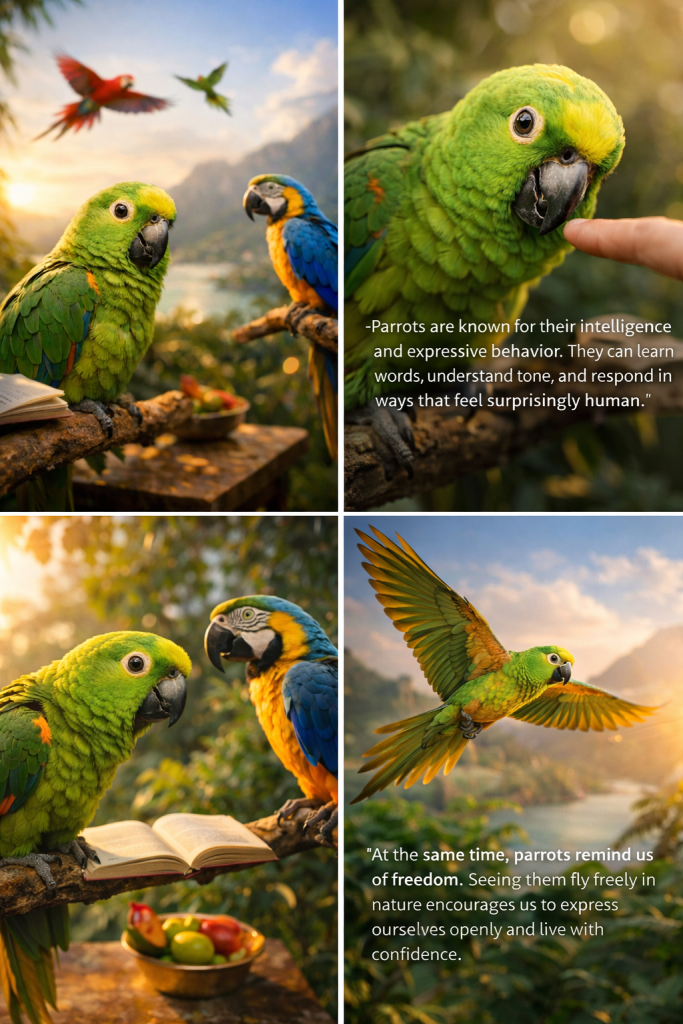
    Parrots are known for their intelligence and expressive behavior. They can learn words, understand tone, and respond in ways that feel surprisingly human. This ability to communicate creates a special connection between parrots and people.

    They are also social and affectionate birds. Parrots enjoy company and often form strong bonds with those around them. Their playful sounds and curious actions bring warmth and energy into everyday life.

    At the same time, parrots remind us of freedom. Seeing them fly freely in nature encourages us to express ourselves openly and live with confidence. Their presence feels like a celebration of color, voice, and life.

    For me, the parrot is more than just a beautiful bird. It represents joy, intelligence, and the freedom to be expressive, which is why it holds a special place in my heart.

Design a site like this with WordPress.com
Get started